
Why Compile?
Deployment is not the first step in shipping a model—compilation is. Compiled models are smaller, faster, and can yield up to 45x reductions in cold-start times: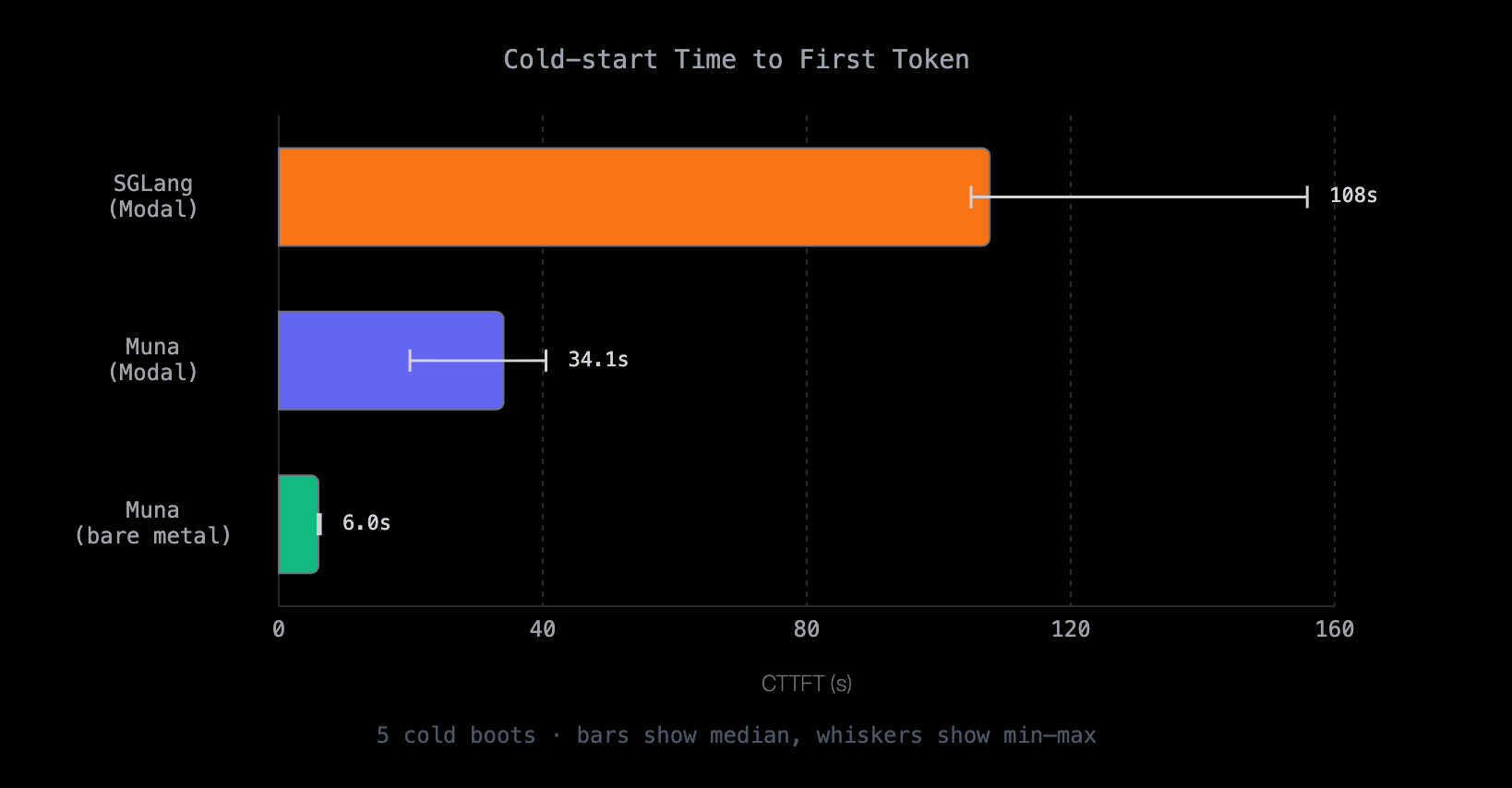
Cumulative time to first token, compiled vs. uncompiled.
Defining a Function
Write your function, add a docstring, then wrap it with our@compile decorator:
greeting.py
The docstring is used as a description, is required, and must be 100 characters or less.
The function must specify parameter and return type annotations. Learn more.
Compiling the Function
Use the Muna CLI to compile the function. First, make sure you are logged into the Muna CLI: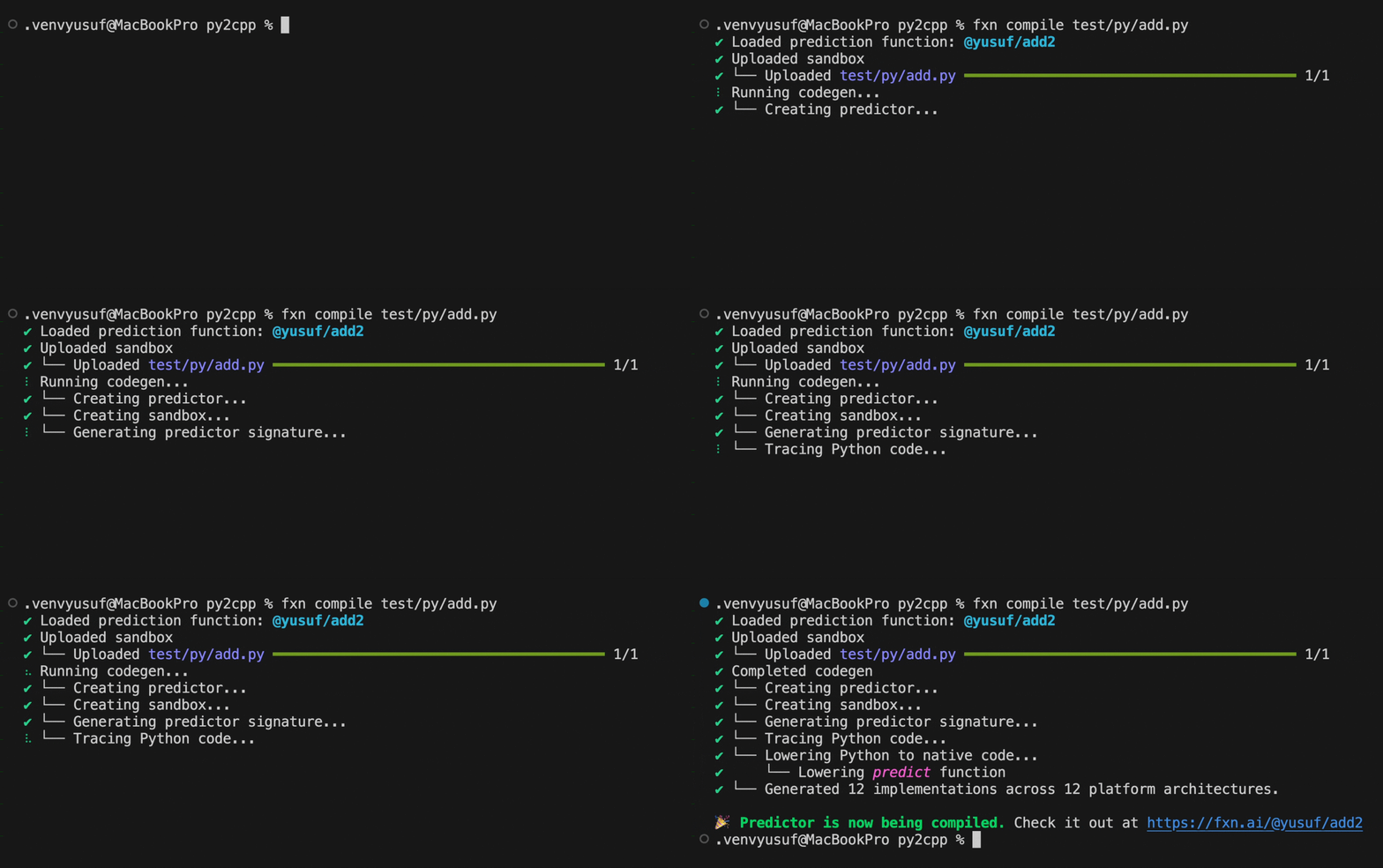
Compiling a function with the Muna CLI. This is realtime--not sped up.
Using the Function
Depending on the complexity of your function, it can take anywhere from a few seconds to a few minutes for the function to be compiled for all platforms. Once the function is compiled, you can run it everywhere:You can check the compilation status of the function at muna.ai/predictors.